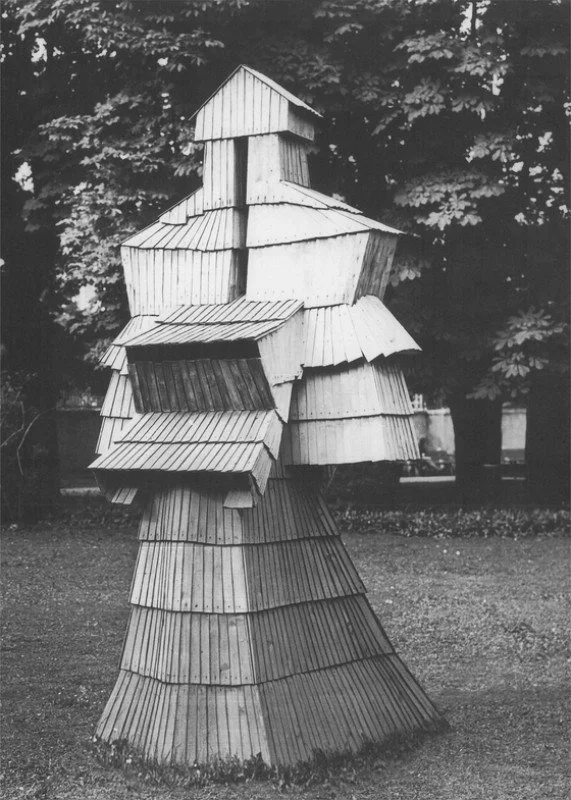



1968
Wood, Shingles
Sunday Echo
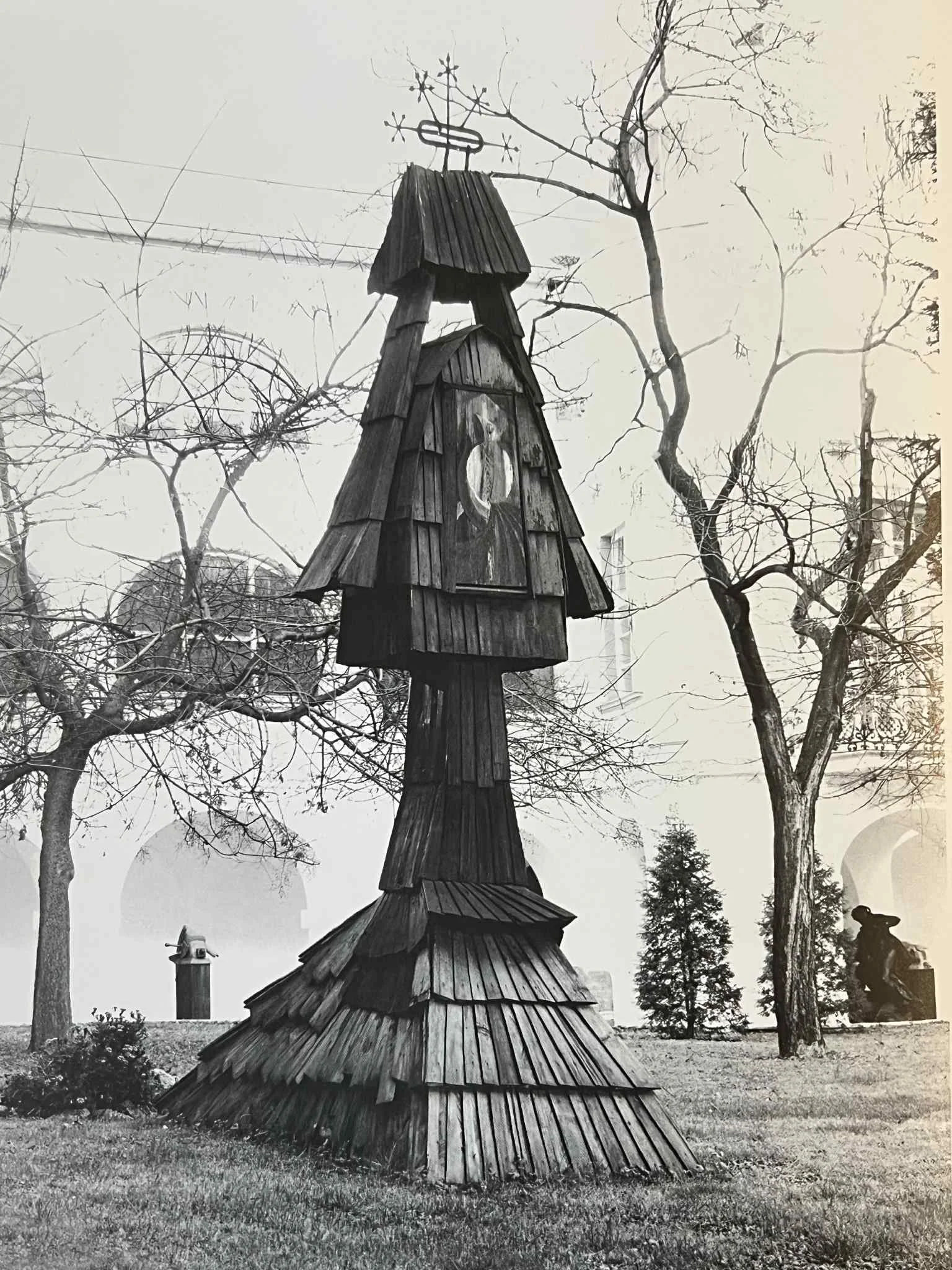
Andrej RudavskyIn the 1960s, Andrej Rudavský experimented with wood, stone, metal, and wooden shingles, working with assemblage and making bold interventions into the material itself. He was interested in the structure of materials and their expressive qualities. Gradually, vertical, concentrated forms became characteristic of his work — chapels, heads, and steles. They draw on the landscape and traditional architecture, while transforming these references into simple, concentrated forms with a modern visual language.
Context
Inspiration and Concept
Rudavský’s inspiration for Sunday Echo came from the specific landscape of eastern Slovakia and the Spiš region, where, during the sculpture symposia in Vyšné Ružbachy, he repeatedly returned to traditional folk architecture. The idea of using wooden shingles in sculpture emerged as a deliberate attempt to transfer the form and rhythm of vernacular architecture directly into sculptural form.
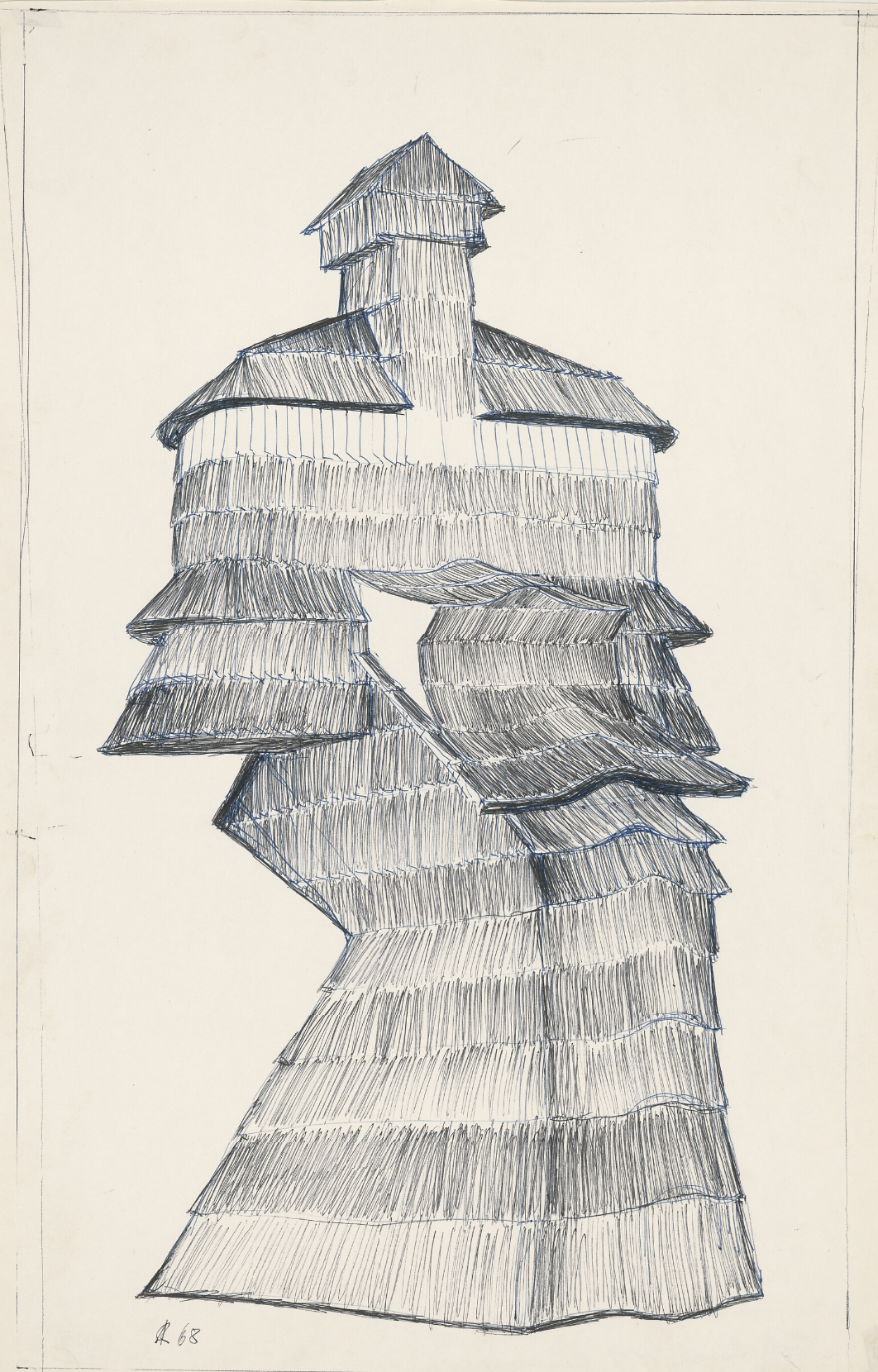
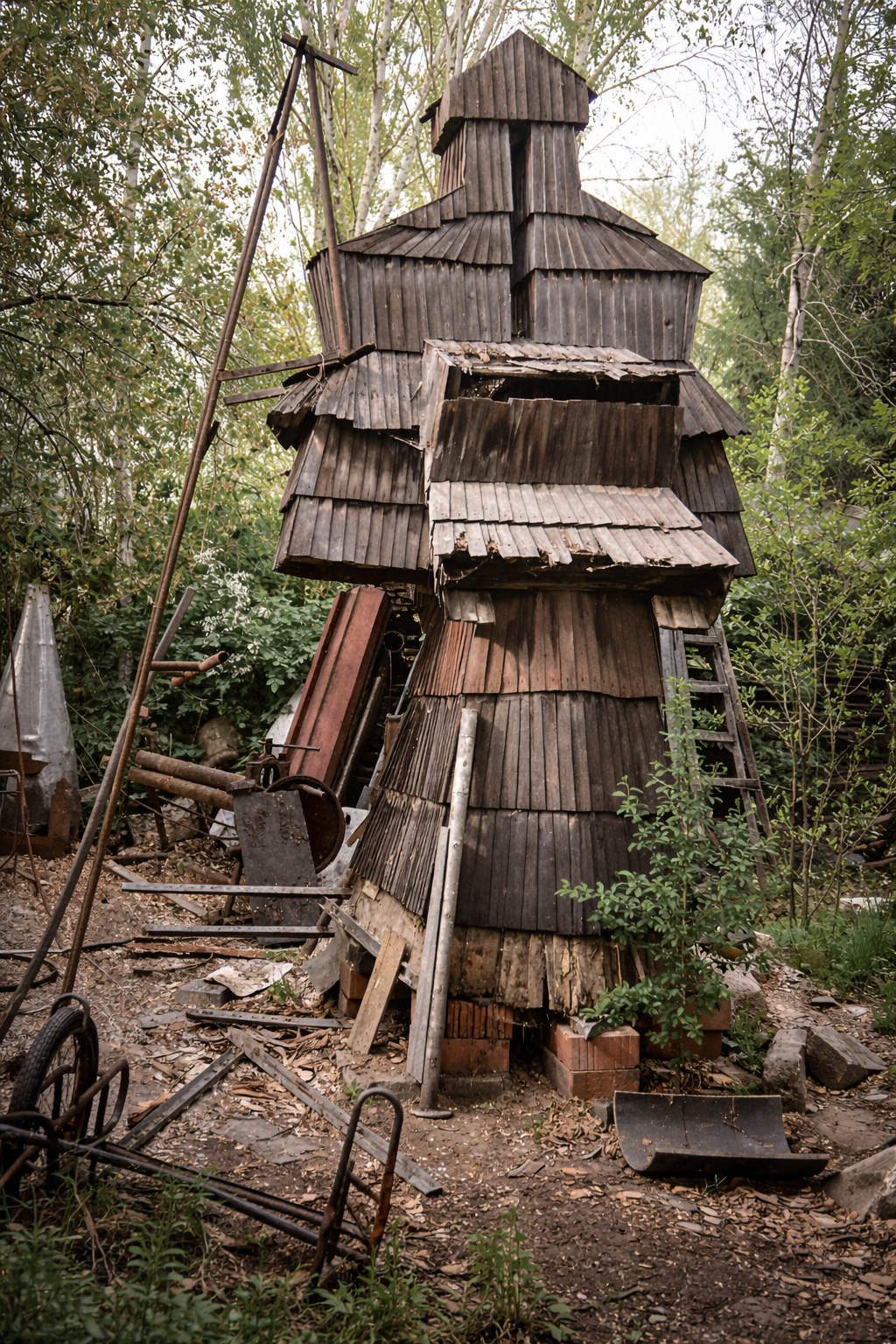
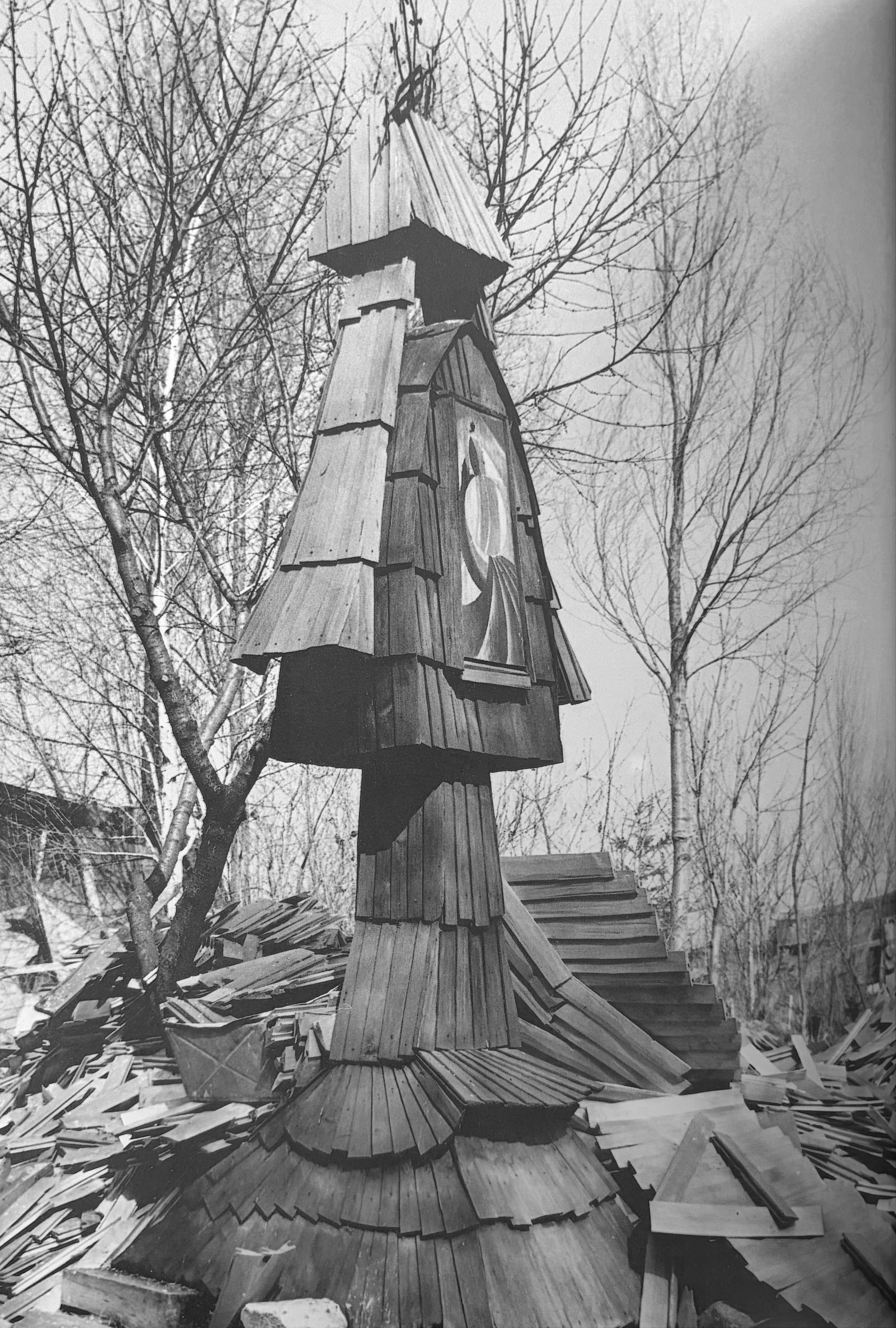
The use of shingles marked a significant shift in his work. A construction material became a carrier of both form and meaning. In 1968, during a period of political liberalization, Rudavský created a series of so-called shingle temple-sculptures. One of the most striking examples is this hundred-metre shingle sculpture, Sunday Echo, which systematically works with layering and the vertical gradation of mass, much like traditional wooden churches.
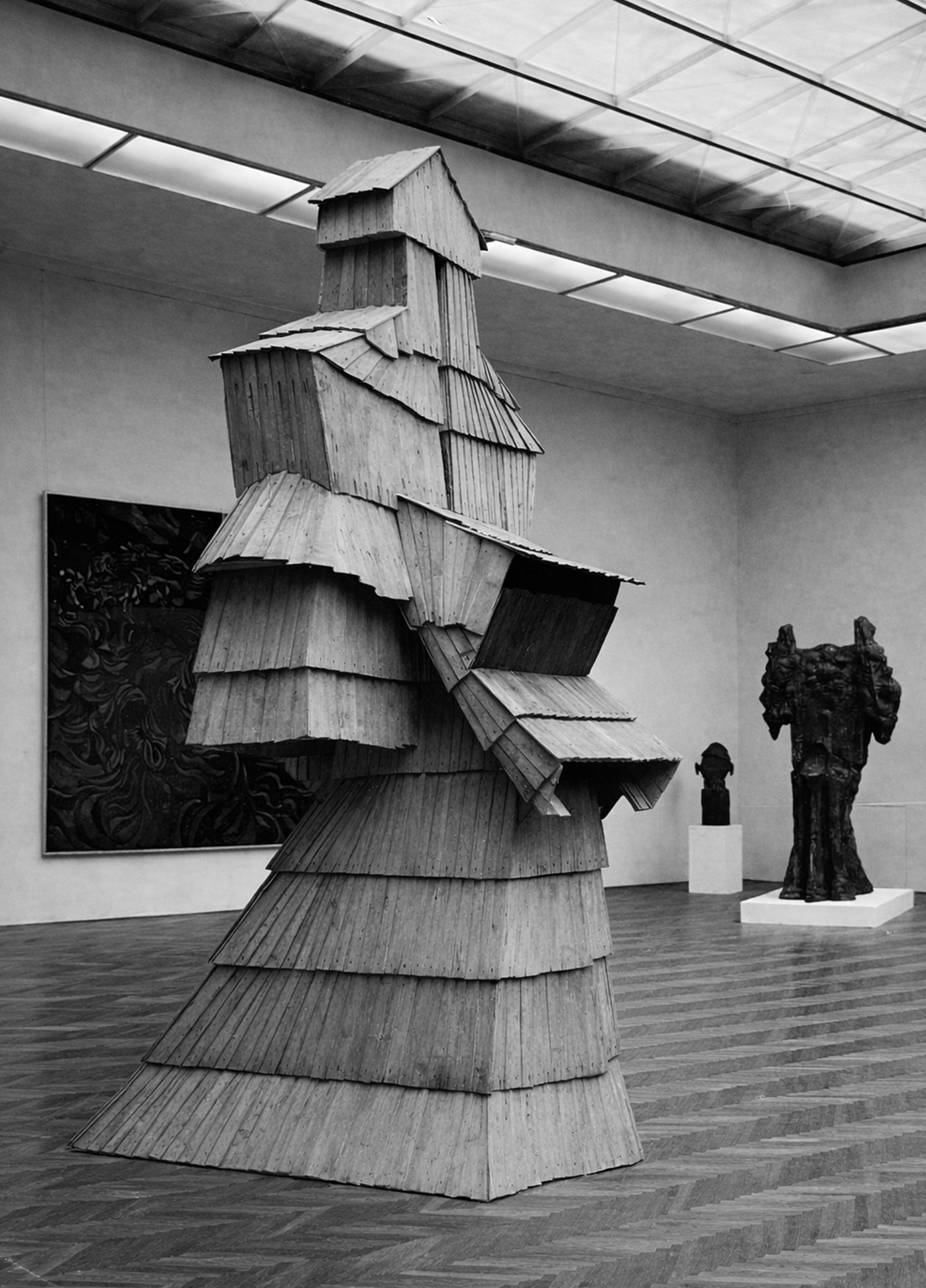
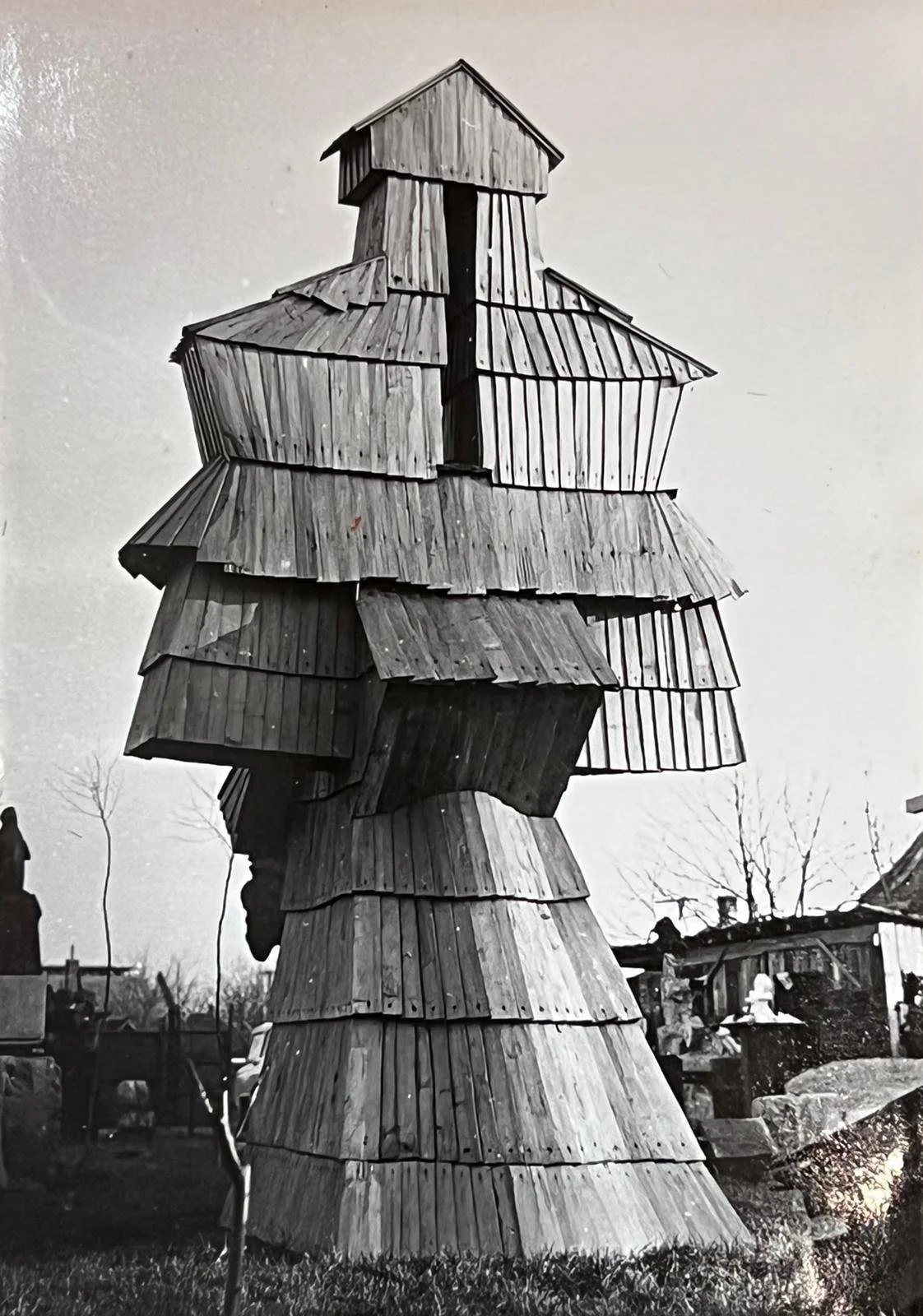
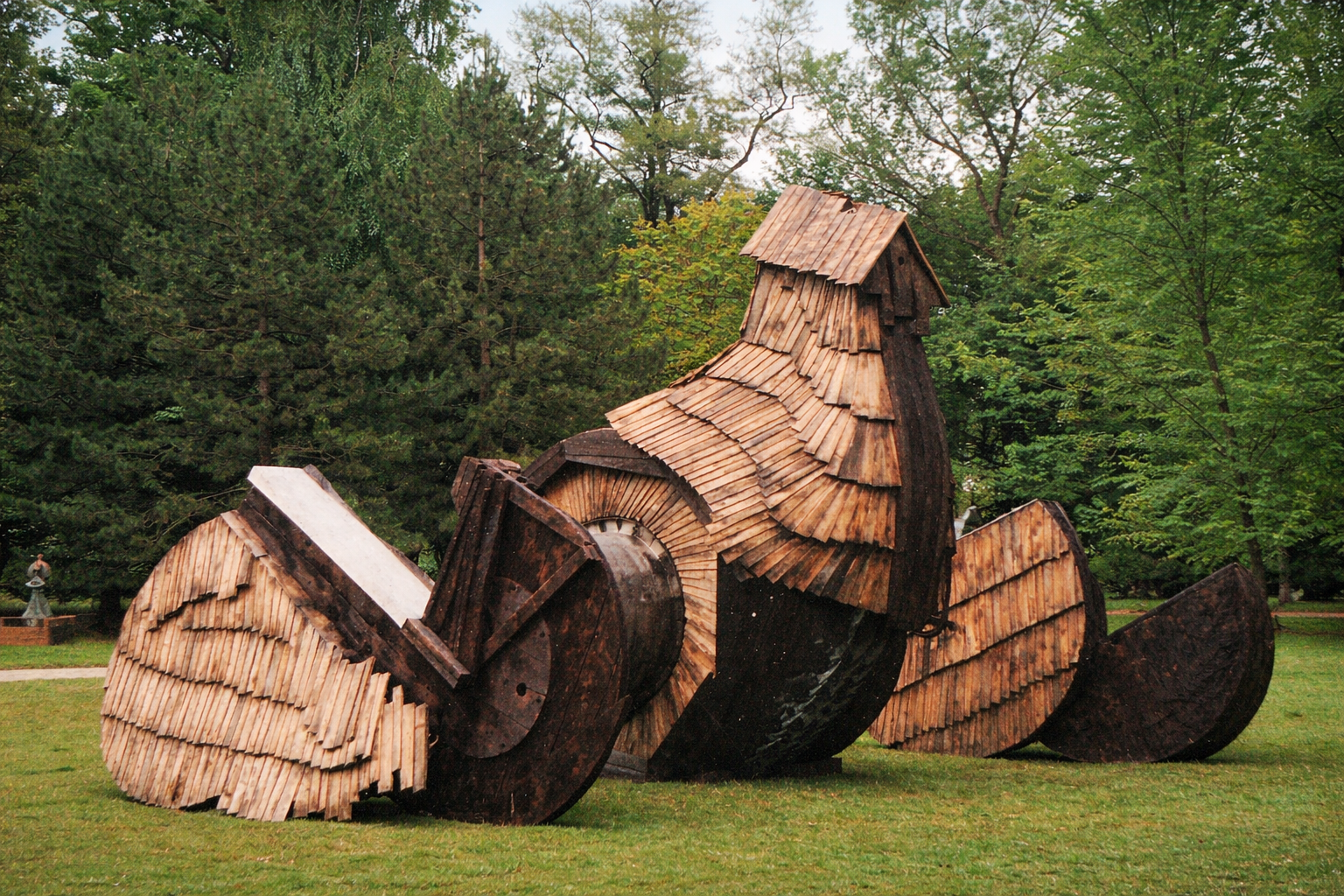
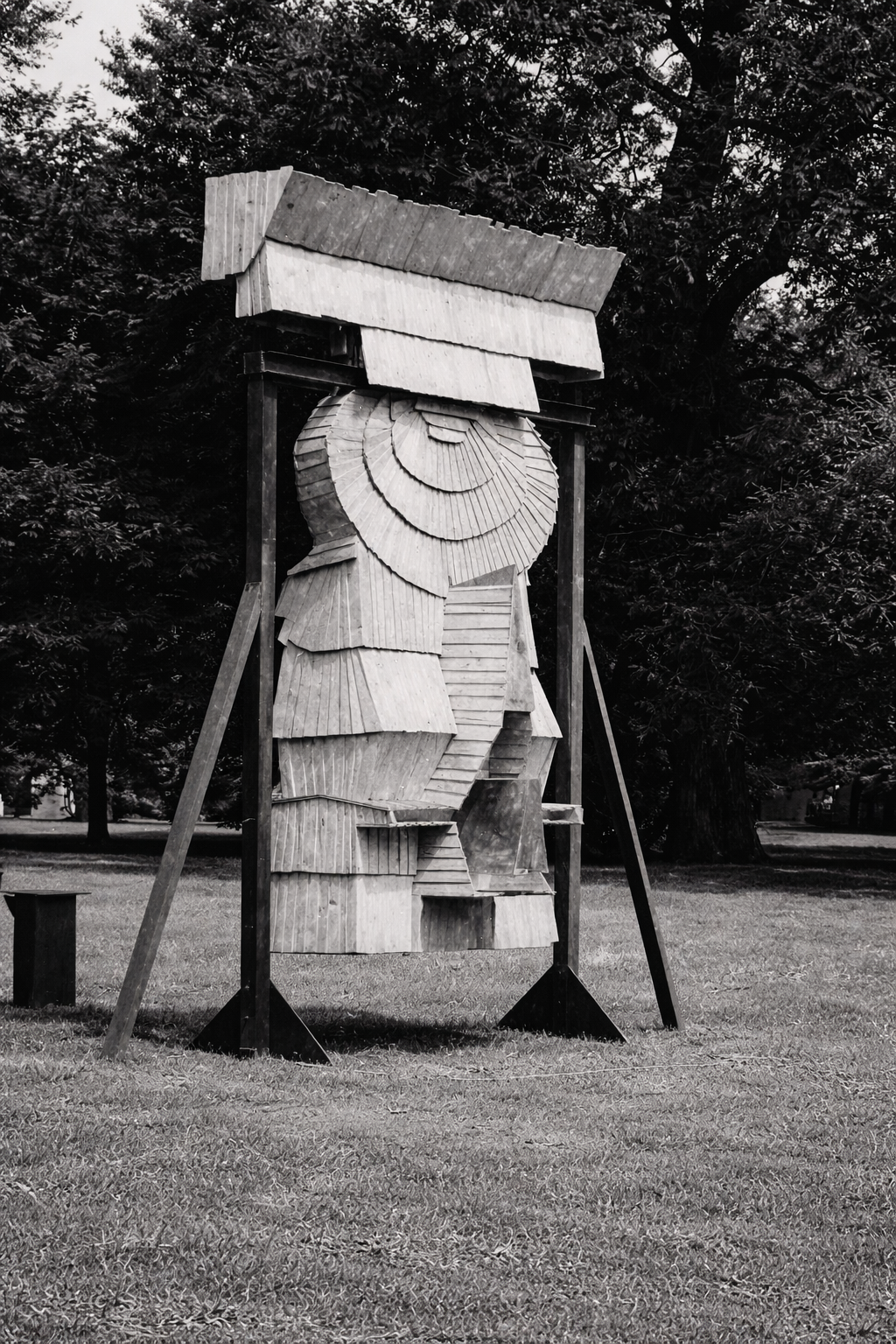
Within Slovak sculpture of the 1960s, Rudavský was essentially the only artist to work systematically with wooden shingles as a primary sculptural material. In his work, shingles are not merely a material, but also a carrier of time. The layered wooden pieces respond to light and shadow and change as the viewer moves around the sculpture. The surface retains its handcrafted character and openly reveals its construction, placing the work somewhere between architecture and sculpture.
Material and Technique
The chapel gradually becomes more than a motif derived from folk architecture, taking on the character of a female figure. Its vertically articulated form, widened lower section resembling a skirt, and narrow upper ending create a silhouette that evokes a standing woman — not literally, but as a symbolic convergence of architecture and the human body. Just as a chapel protects a sacred space, the female form here carries associations of motherhood, support, and continuity.
The Chapel as a Female Archetype
„Myslel som si, že keď začnem robiť šindľové sochy, čosi z tej ľudovej architektúry v mojom pretavení prežije…“

Shingles in Other Works

© Rudavskys Magic Garden 2026