


1968
Wood, Shingles, Metal
Pendulum Sculpture
Andrej RudavskyIn the 1960s, Andrej Rudavský experimented with wood, stone, metal, and wooden shingles, working with assemblage and making bold interventions into the material itself. He was interested in the structure of materials and their expressive qualities. Gradually, vertical, concentrated forms became characteristic of his work — chapels, heads, and steles. They draw on the landscape and traditional architecture, while transforming these references into simple, concentrated forms with a modern visual language.
Context
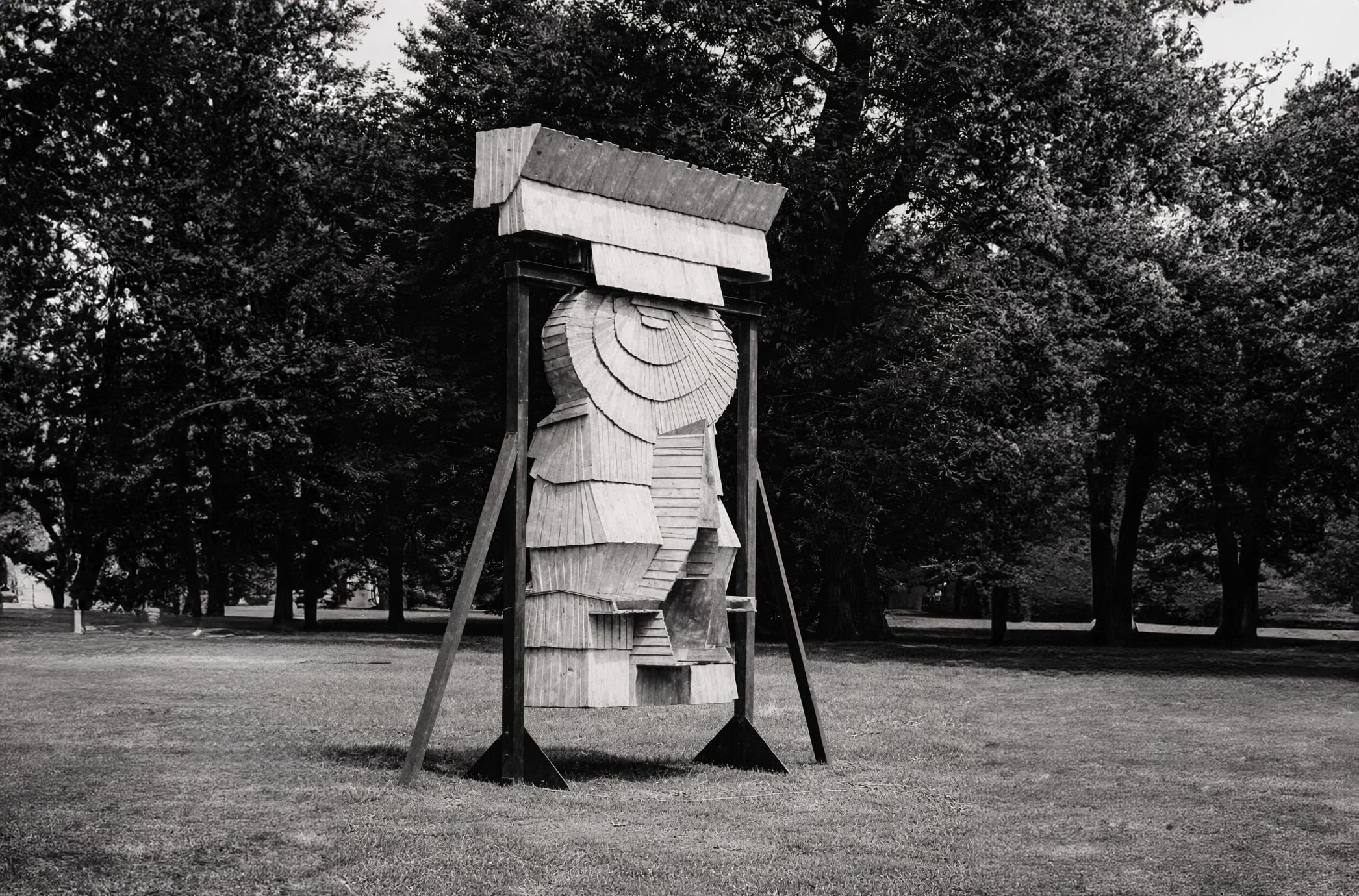
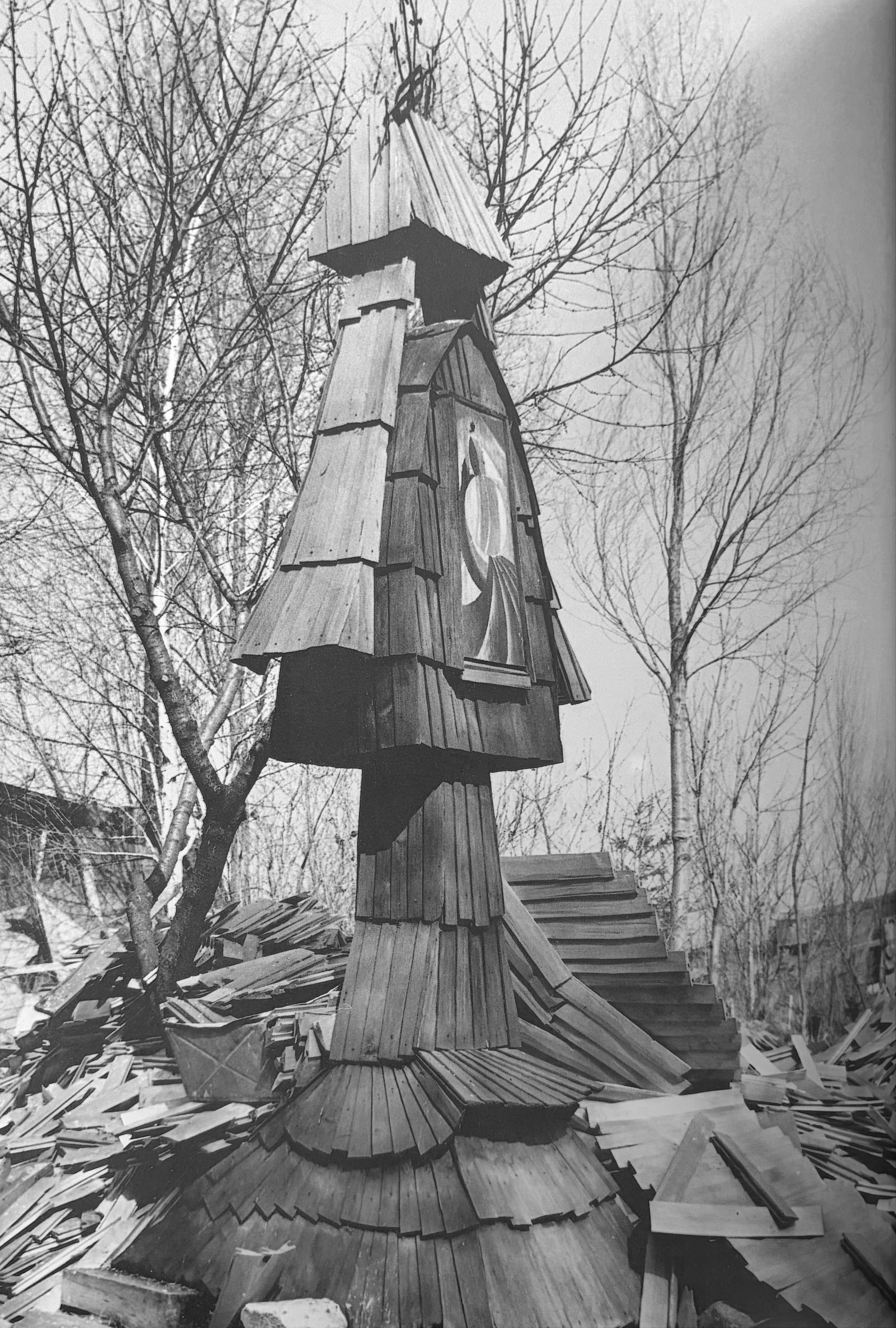
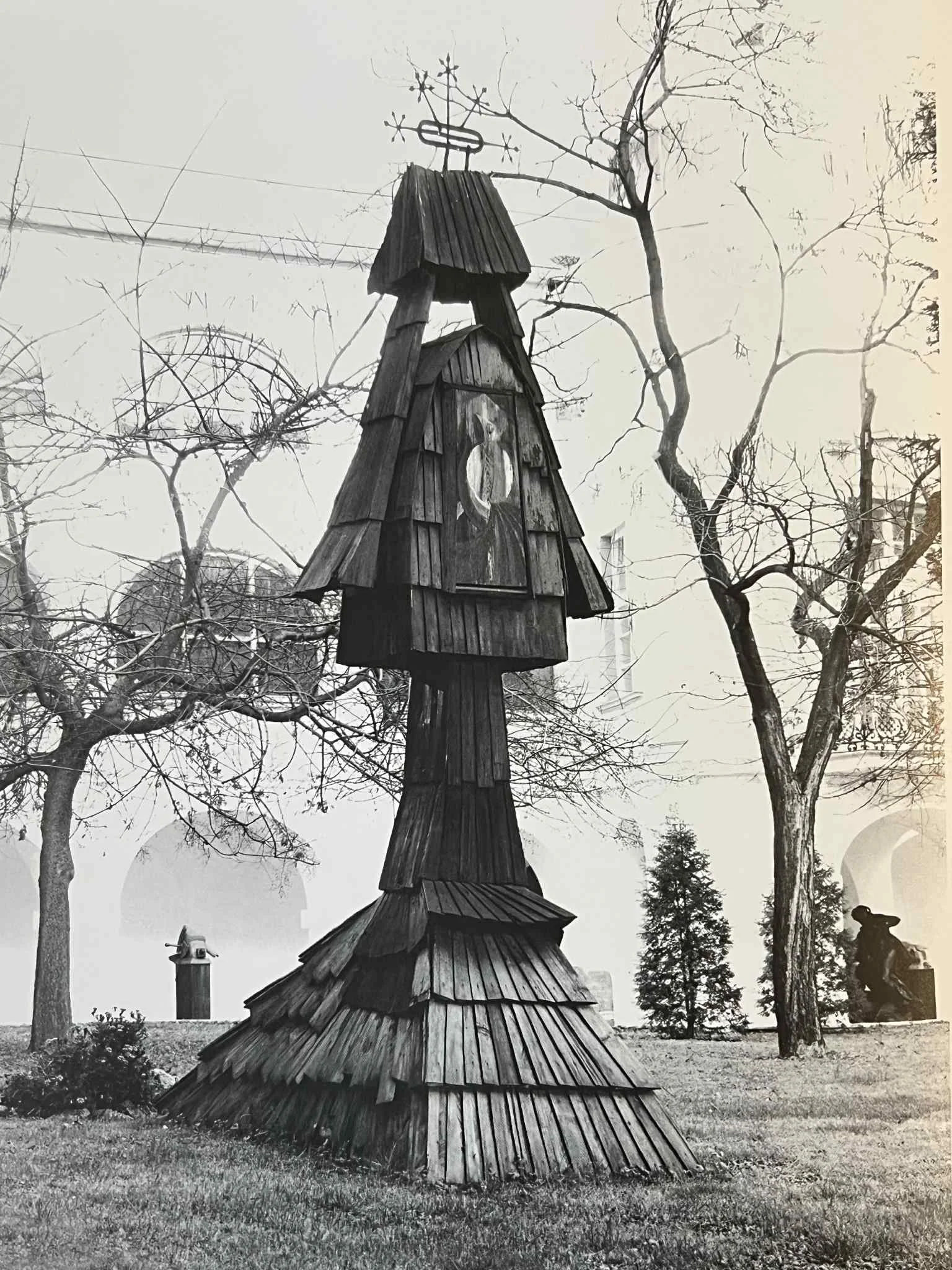
Pendulum Sculpture was created in the late 1960s, during a period when Andrej Rudavský was intensively exploring wooden shingles and forms derived from vernacular architecture. The sculpture draws on the architecture of traditional roofs and entrance gates leading into rural farmyards. Rudavský, however, transforms this architectural basis into an autonomous symbol.
The principle of movement was essential to the work: the entire wooden “mechanism,” together with an inserted stainless-steel wedge, was suspended from a metal structure in a manner reminiscent of a bell. This allowed the sun-like symbolic element of the sculptural object to be set in motion both by hand and by the wind. In this unusual way, a new formal language was applied to forms rooted in folk tradition, while also extending toward the kinetic art tendencies that were contemporary at the time.
Inspiration and Concept
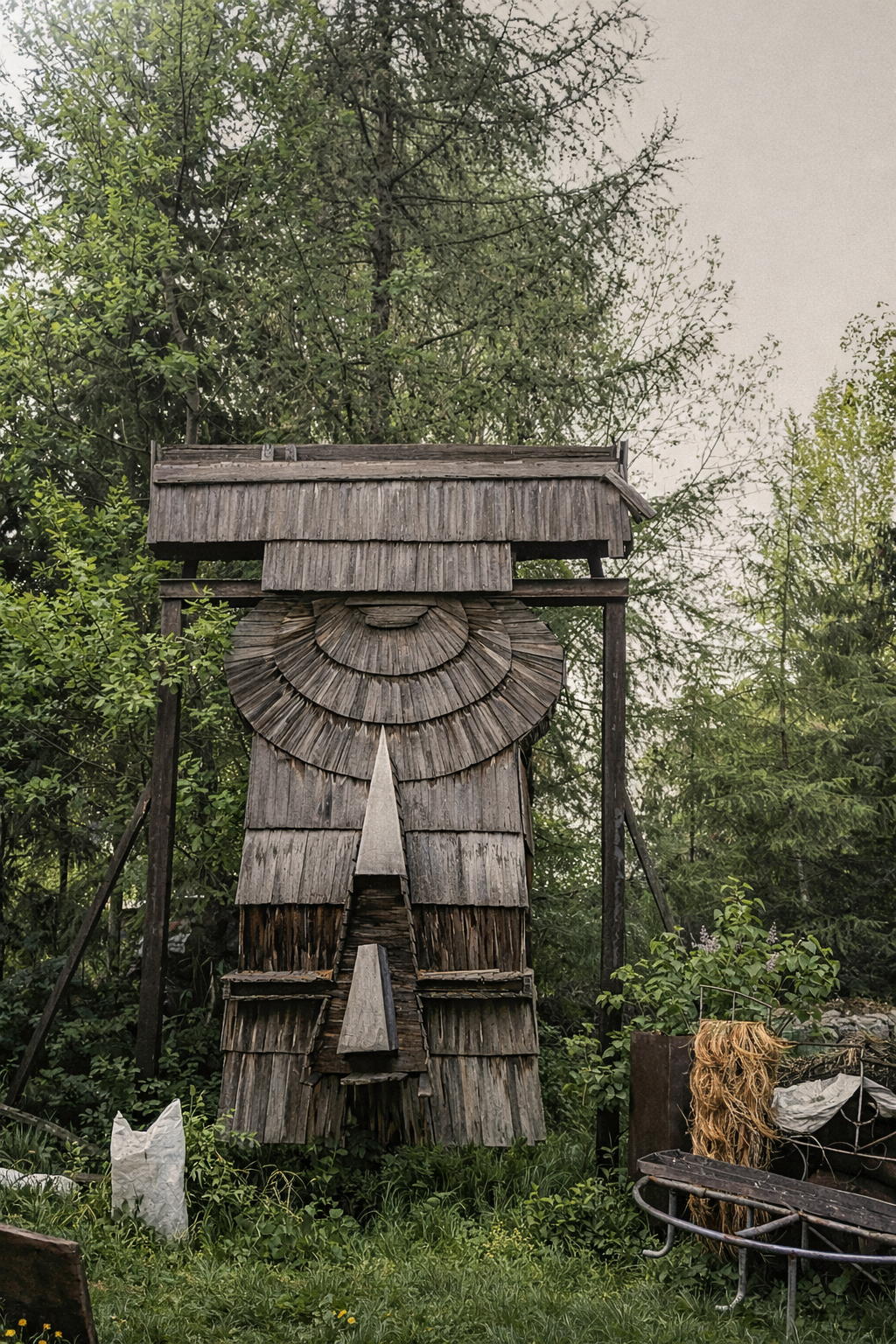
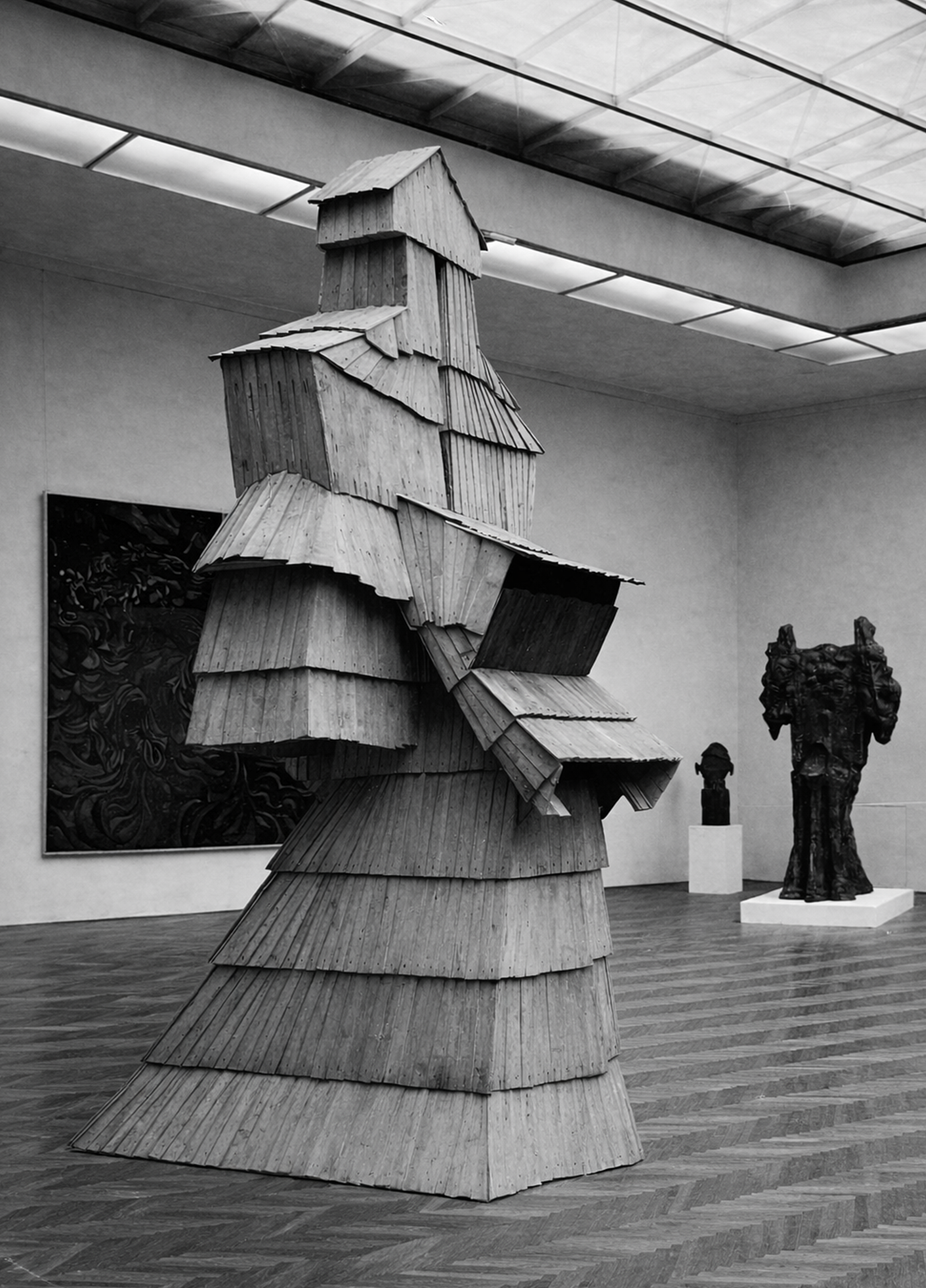
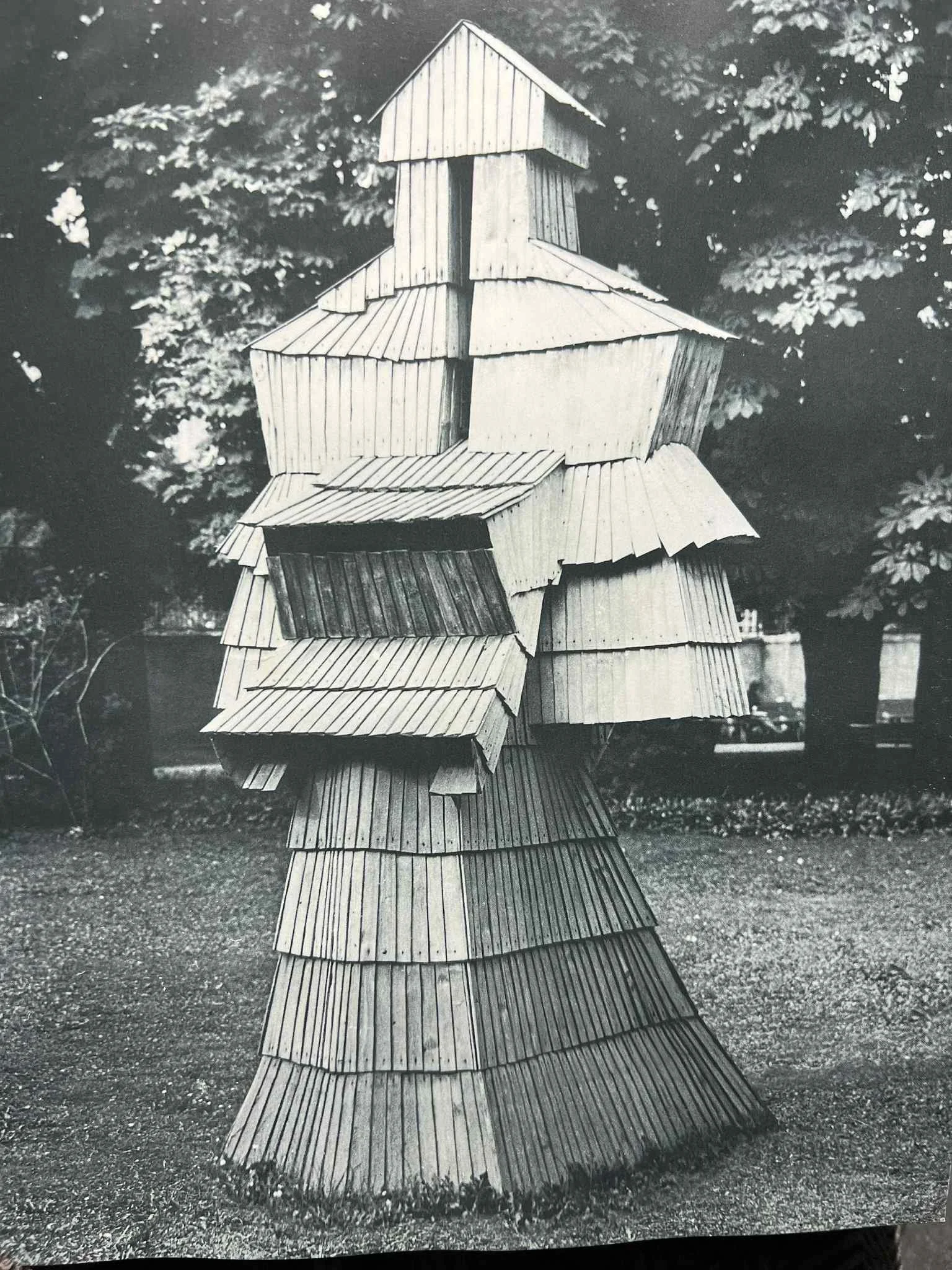
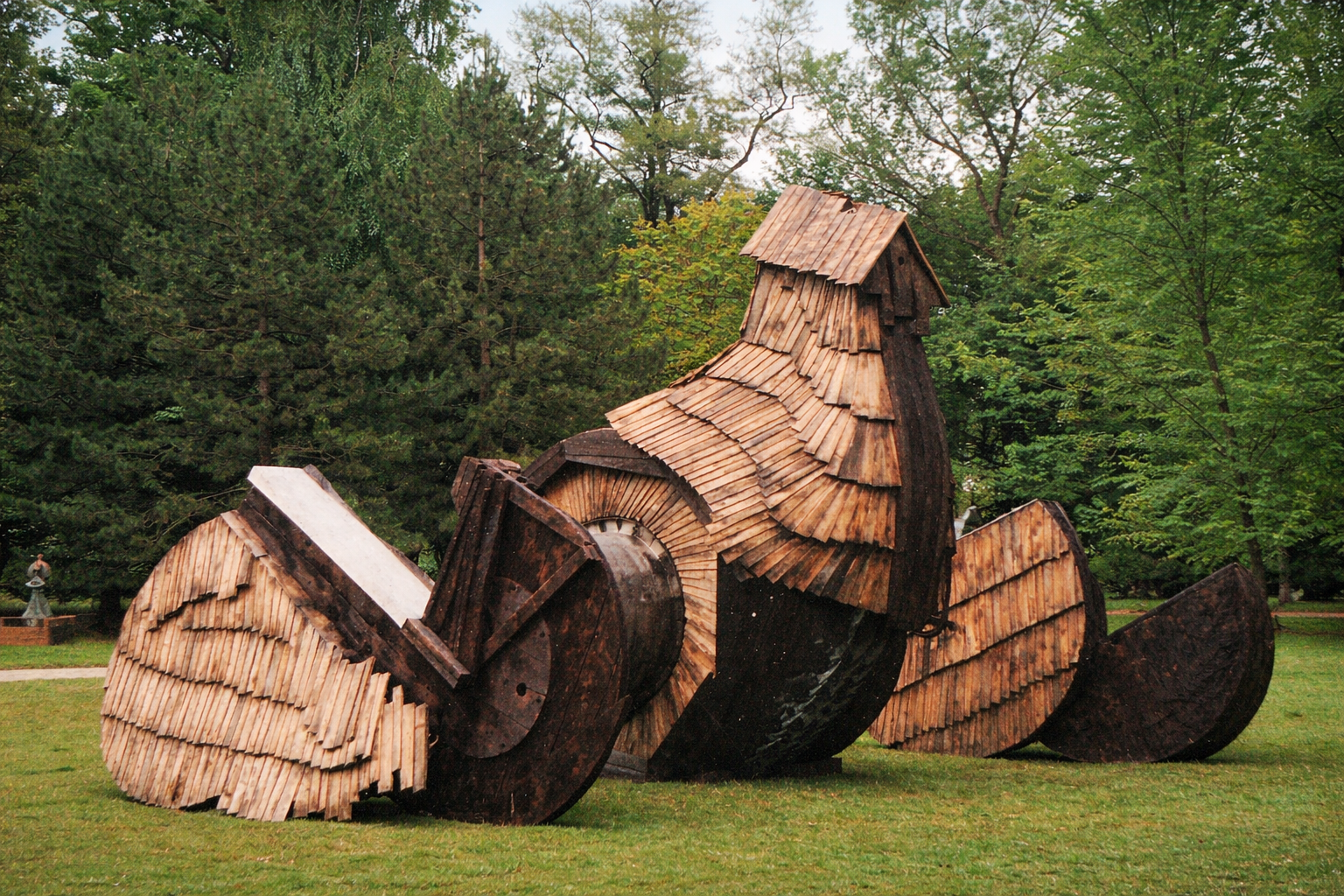
The use of wooden shingles marked a significant shift in Rudavský’s work. A construction material became a carrier of both form and meaning. In 1968, during a period of political liberalization, he created a series of so-called shingle temple-sculptures. Within Slovak sculpture of the 1960s, Rudavský was essentially the only artist to systematically use wooden shingles as a primary sculptural material.
Characteristic of the work is the layering of wooden elements and the openly visible technical construction, which emphasizes the mechanical principle of the pendulum. The metal element stabilizes the structure while simultaneously creating tension between the weight of the material and its capacity for movement. Pendulum Sculpture therefore exists at the intersection of architecture, symbol, and movement — combining tradition with the experimentation characteristic of the second half of the 1960s.
Material and Technique
“I thought that if I began making shingle sculptures, something of that folk architecture would survive through my own transformation
of it…”

Shingles in Other Works

© Rudavskys Magic Garden 2026