THE ART OF SIGNS
The Art of Signs (“Značkové Umenie“) project originated from an idea by academic painter Ján Raška to transform discarded traffic signs into works of art. An ordinary object that determines rules, direction, and movement in everyday life becomes, in the hands of artists, a space for personal expression, imagination, and creative freedom.
Over time, prominent Slovak, Czech, and international artists from various fields of visual art joined the project. Each of them worked with the same foundation—a used traffic sign—yet the resulting works differ significantly in their themes, styles, and approaches.
This is precisely the essence of the project. A single shared object becomes a meeting place for different generations, experiences, and artistic perspectives. The traffic sign ceases to fulfil its original function and is transformed into a symbol of creativity, dialogue, and collaboration.
COLLABORATION AT MAGIC GARDEN
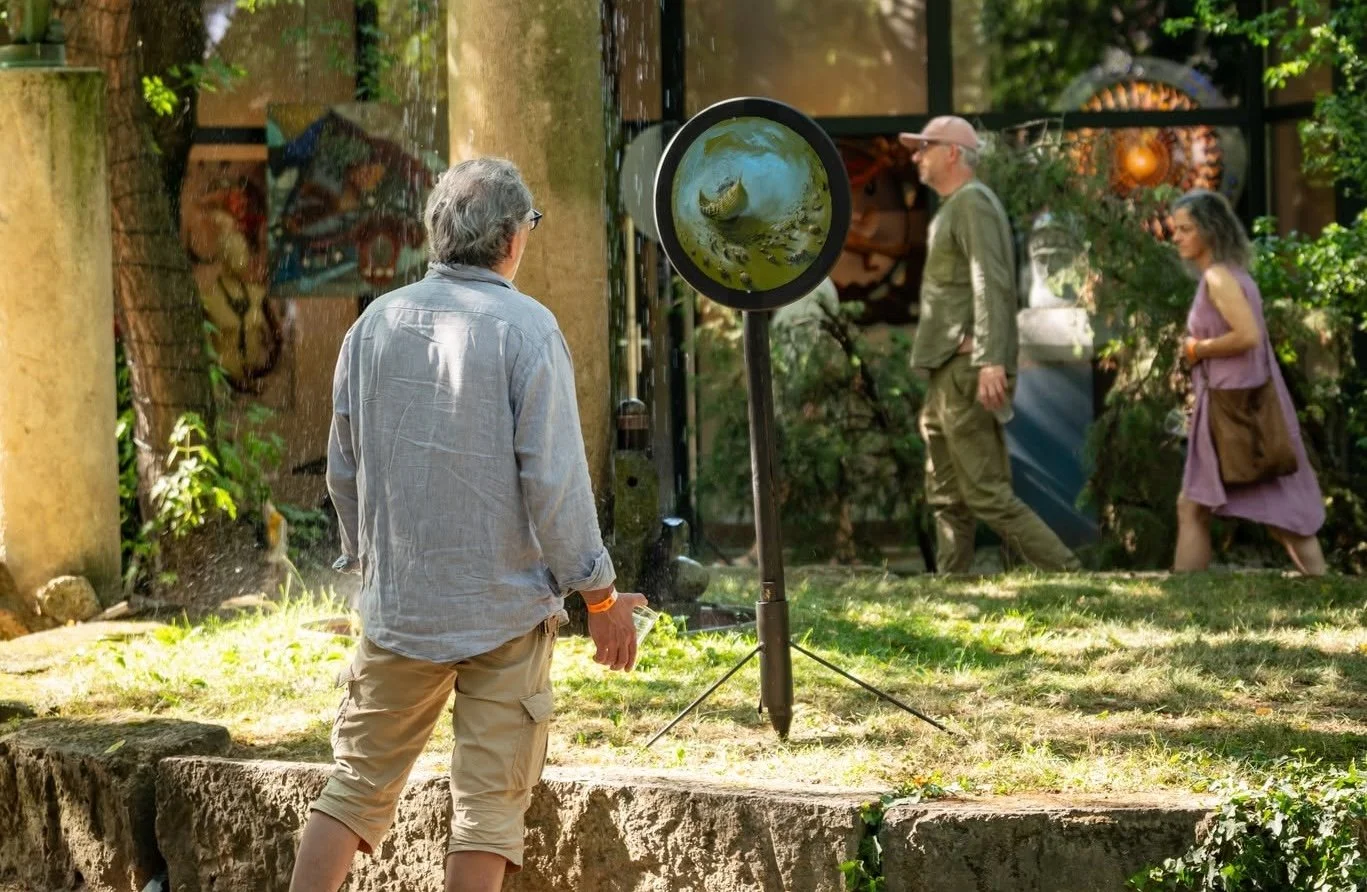
Within the setting of Magic Garden, the Sign Art project acquired a new dimension. Alongside the original group of artists, additional invited artists and creators joined the project, bringing new perspectives and a contemporary interpretation of its theme.
This collaboration is rooted in Magic Garden’s long-term aim to connect different generations, artistic approaches, and creative communities. Alongside established figures, space was created for emerging artists, as well as for creators working in other media and disciplines.
By expanding the project to include new participants, a natural dialogue emerged between experience and experimentation, between different generations, and between different ways of thinking about art. This kind of connection is one of the core values underpinning not only Sign Art, but also the philosophy of Magic Garden.
A found traffic sign ceases to direct movement through space and becomes a vehicle for a different kind of orientation. Its original function is overlaid by a face that appears as a fragment of consciousness—divided, unstable, and ambiguous.
The circular format preserves the authority of the traffic symbol, yet its meaning is emptied out. Instead of a clear instruction, an image emerges that oscillates between a mask, a head, and a mechanical diagram. What was intended to provide direction begins to doubt. What was meant to be readable at first glance resists unambiguous interpretation.
The work forms part of a long-term exploration of transforming existing signs and systems into autonomous visual situations in which order encounters disintegration and identity meets anonymity.
Acrylic on a traffic sign, mixed media.
Bio
Hugo Rayman is a visual artist working at the intersection of painting, graphic art, and object-based art. His work explores the relationship between sign, image, and perception. He frequently works with appropriated materials.
Bio
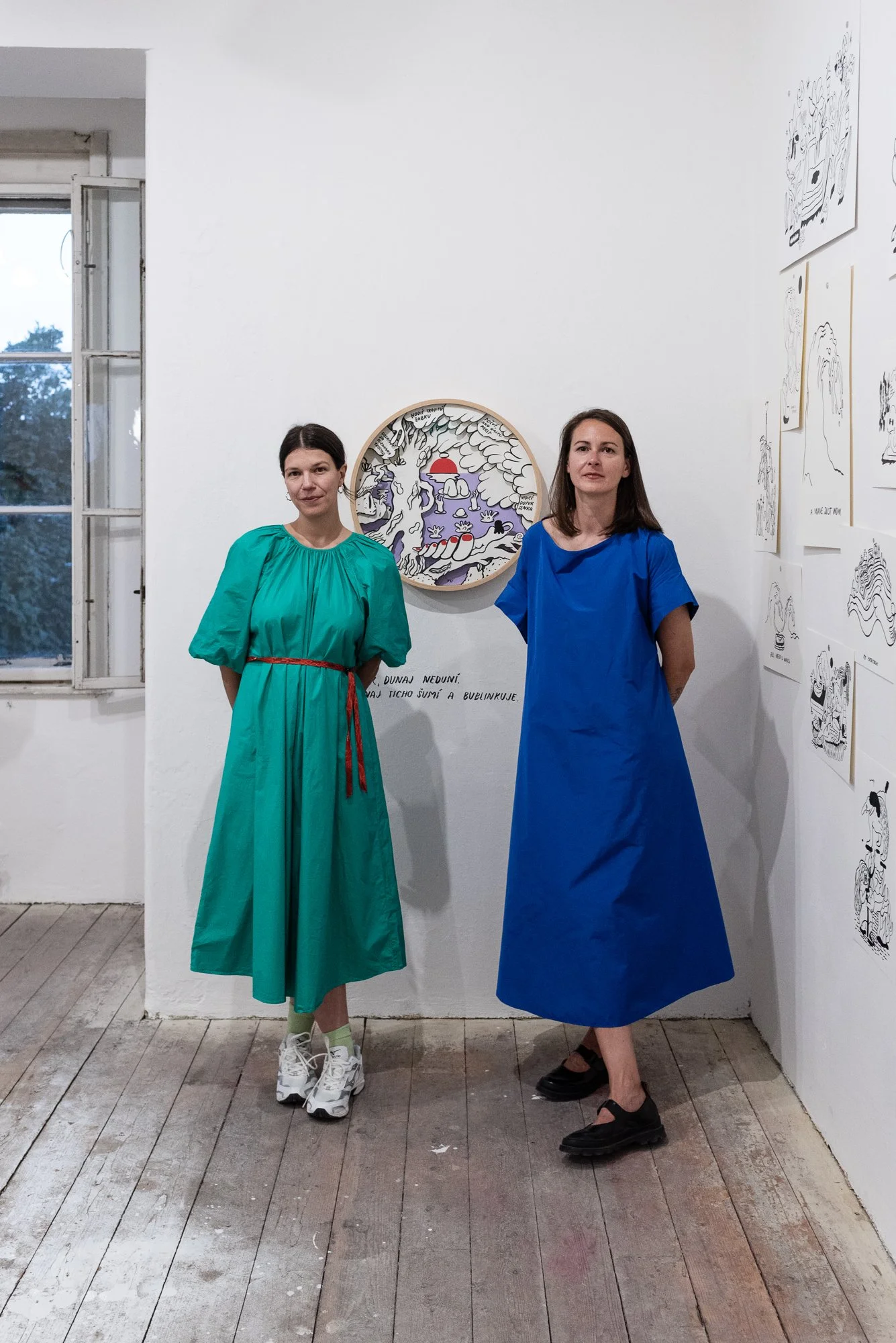
Ové Pictures is the creative duo of Michaela Čopíková and Veronika Obertová, whose long-term practice spans animated film, design, and visual art across both traditional and new media.
Their work has gradually evolved from classical animation towards more experimental forms and interdisciplinary approaches. They currently focus extensively on drawing, object-making, and original animation projects. A distinctive feature of their practice is their original paper-and-wood diorama technique, which they use in films, installations, and visual art projects.
Bio
Viktoria Valihora is a young Slovak visual artist currently living and studying in New York. Working across a range of media, she observes the world and the people around her. Through her art, she seeks to communicate her perception of reality, capture the subtle nuances of human relationships, and reflect on situations that resonate with her in everyday life.
Waves
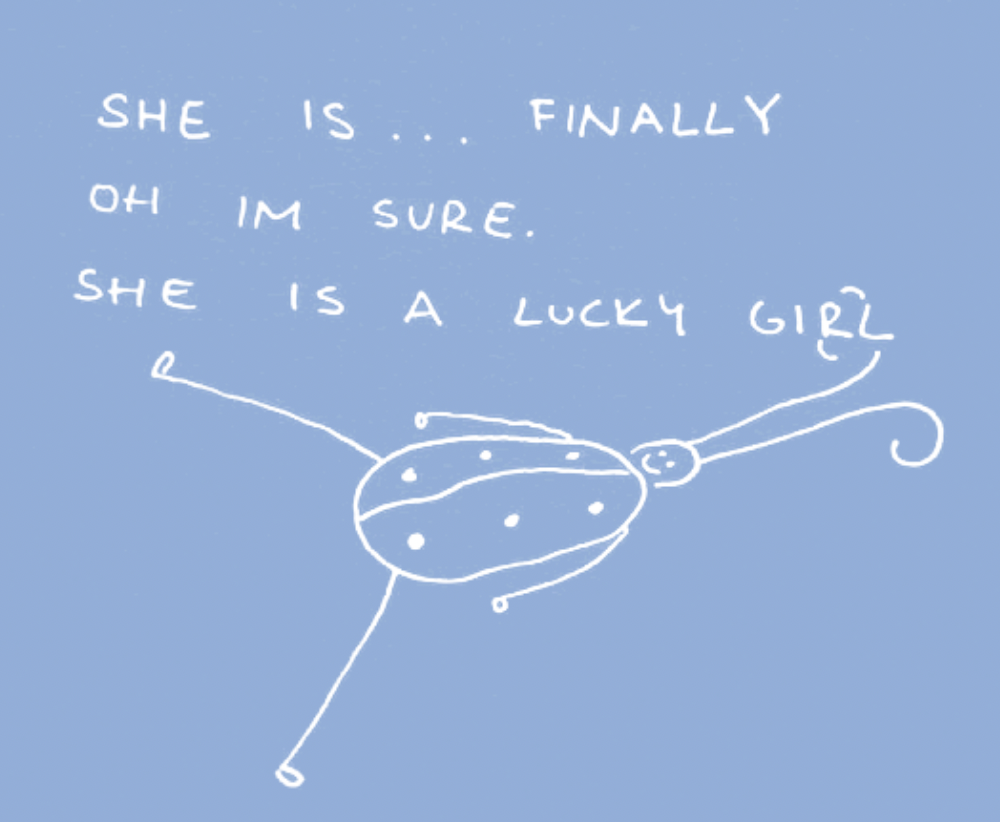
“Days come and go like waves. When they are better, all is well; when they are worse, I think of the better ones.”
The Danube
“By the way, the Danube does not roar. It quietly murmurs and bubbles.”
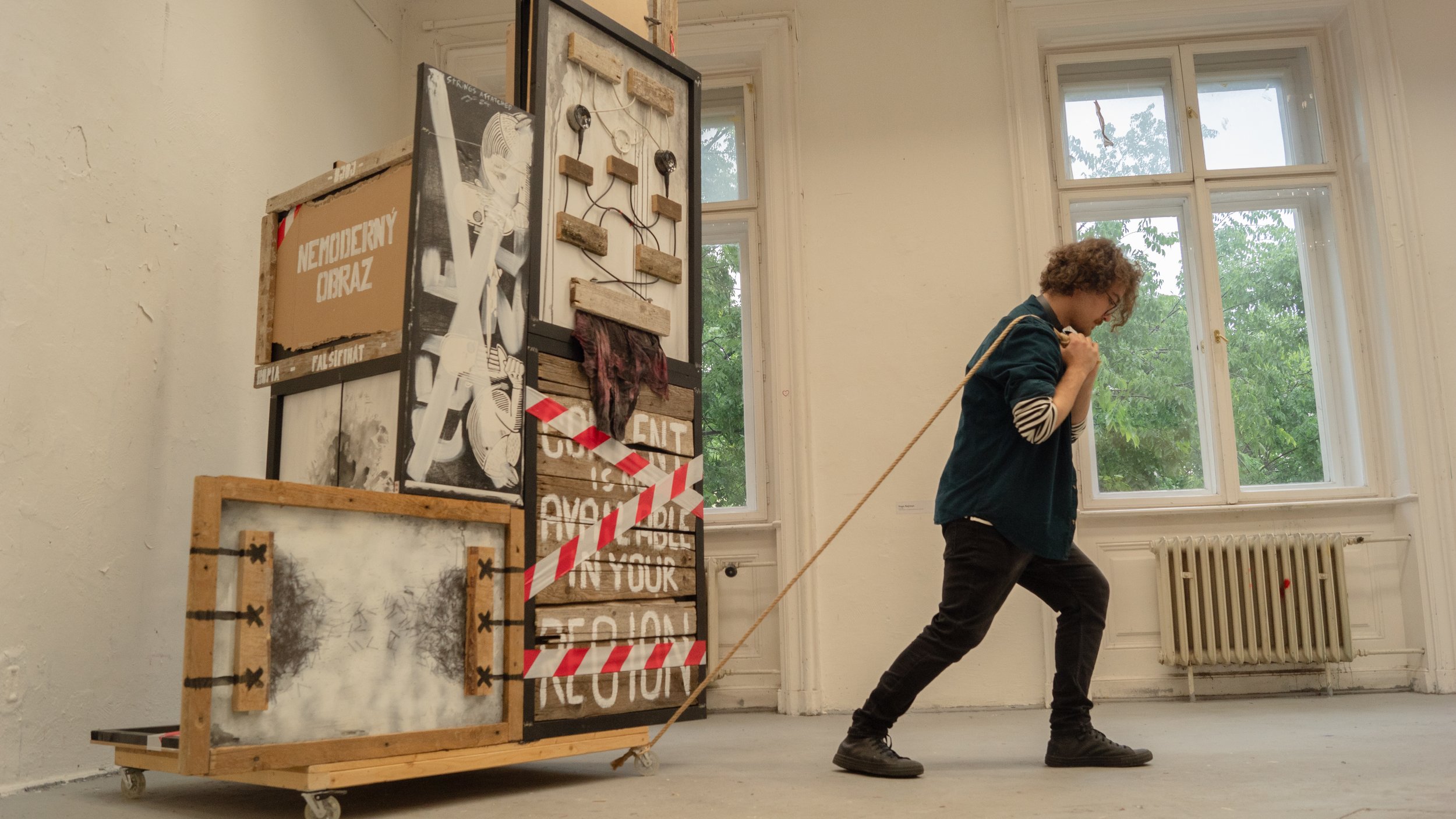
Hugo Rayman
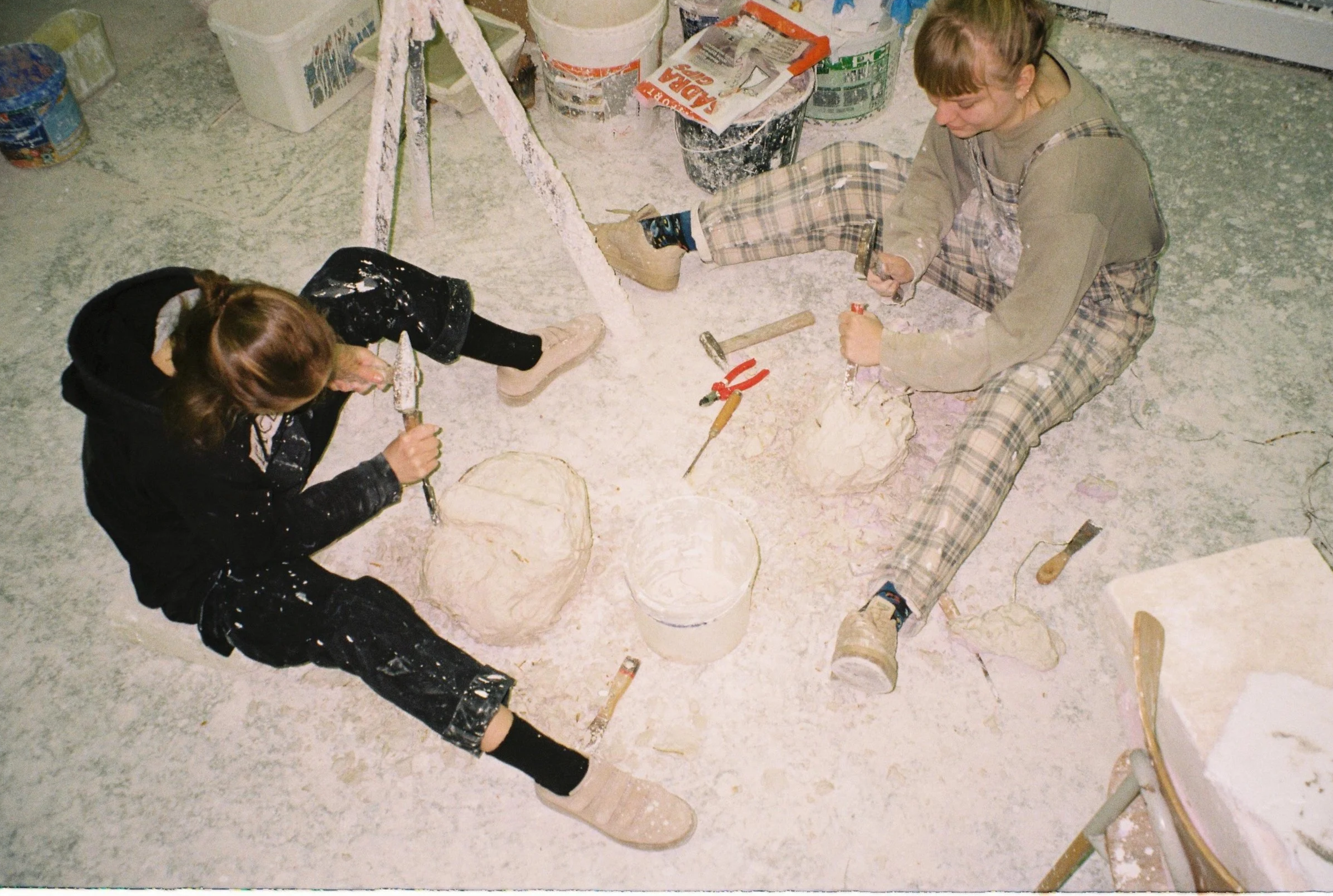
Dorota Krkošková
a Radka Knežo
Interweaving
“if they are unwilling to see,
then they are a fleeting kind.
neither extinction,
nor healing.
we grow.
and we keep watch.
to change something.
to break a glass.
to bury a word.
to feed the roots.
to let them speak.
look,
a goat and a bird.”
Fibreglass, jute, wheatgrass.
Bio
dr.k
“drglo do teba”, an artistic duo.
dorota krkošková. radka knezo.
Two design students, but above all, passionate devotees of art. Our practice focuses on product design while naturally extending into the field of fine art, where we explore new forms, materials, and processes.
We are fascinated by living materials, their capacity for change, and their dialogue with the surrounding environment. Our installation creates a space where experimentation, material, and imagination come together.
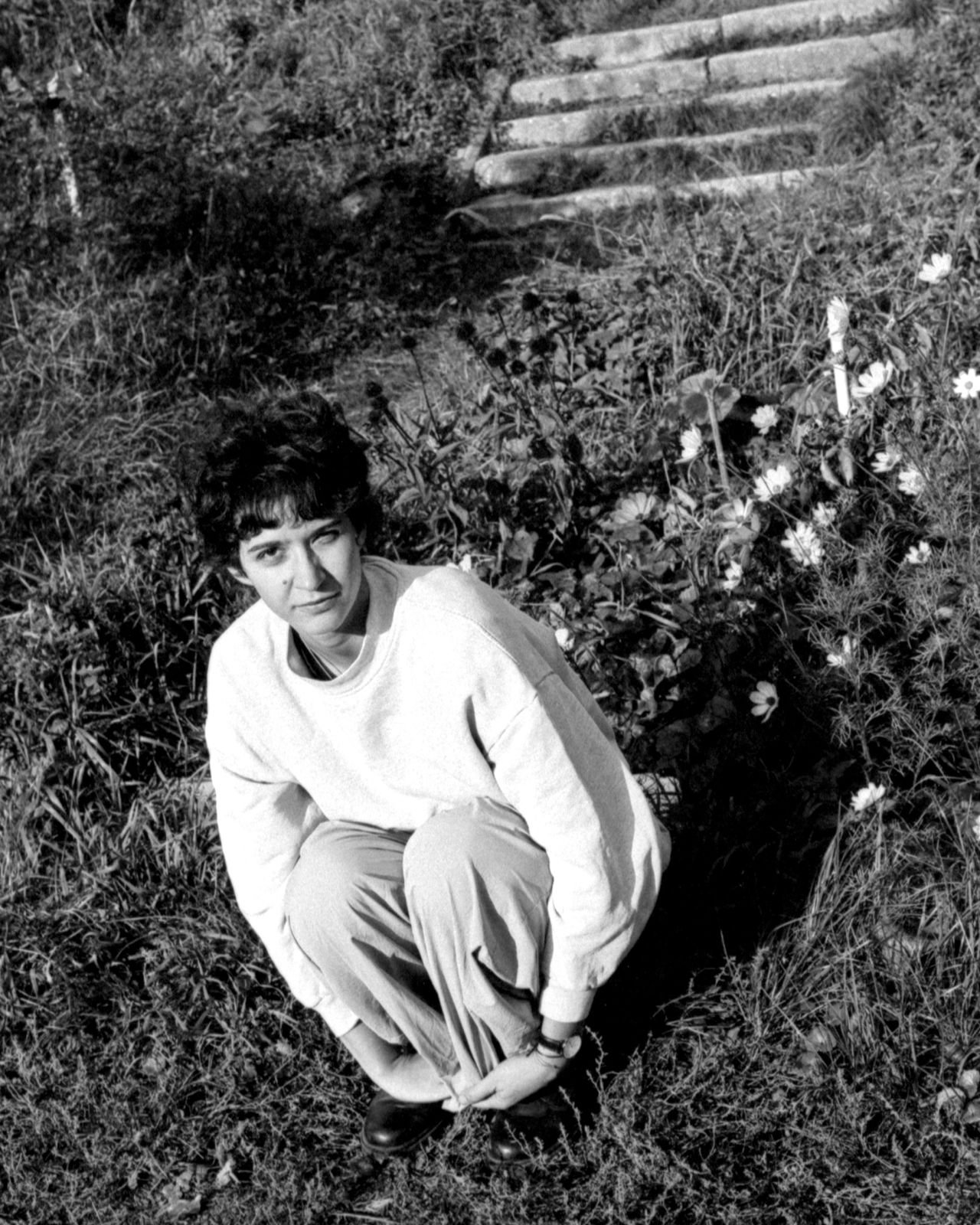
Katka Gertli
The work keine Ordnung is a sarcastic commentary on human anxiety about anything that deviates from the norm, as well as on the sometimes rigid and irrational desire to regulate everything. Individuals possess this tendency to varying degrees, regardless of their profession, social category, or political beliefs. By its very nature, however, it is an illiberal principle—and, even worse, an incurious one.
The image references the “Kim Kardashian crying face” meme, which has become a universal caricature of exaggerated reactions. The title keine Ordnung comes from German and means disorder or chaos, with an unmistakably pejorative undertone.
Acrylic.
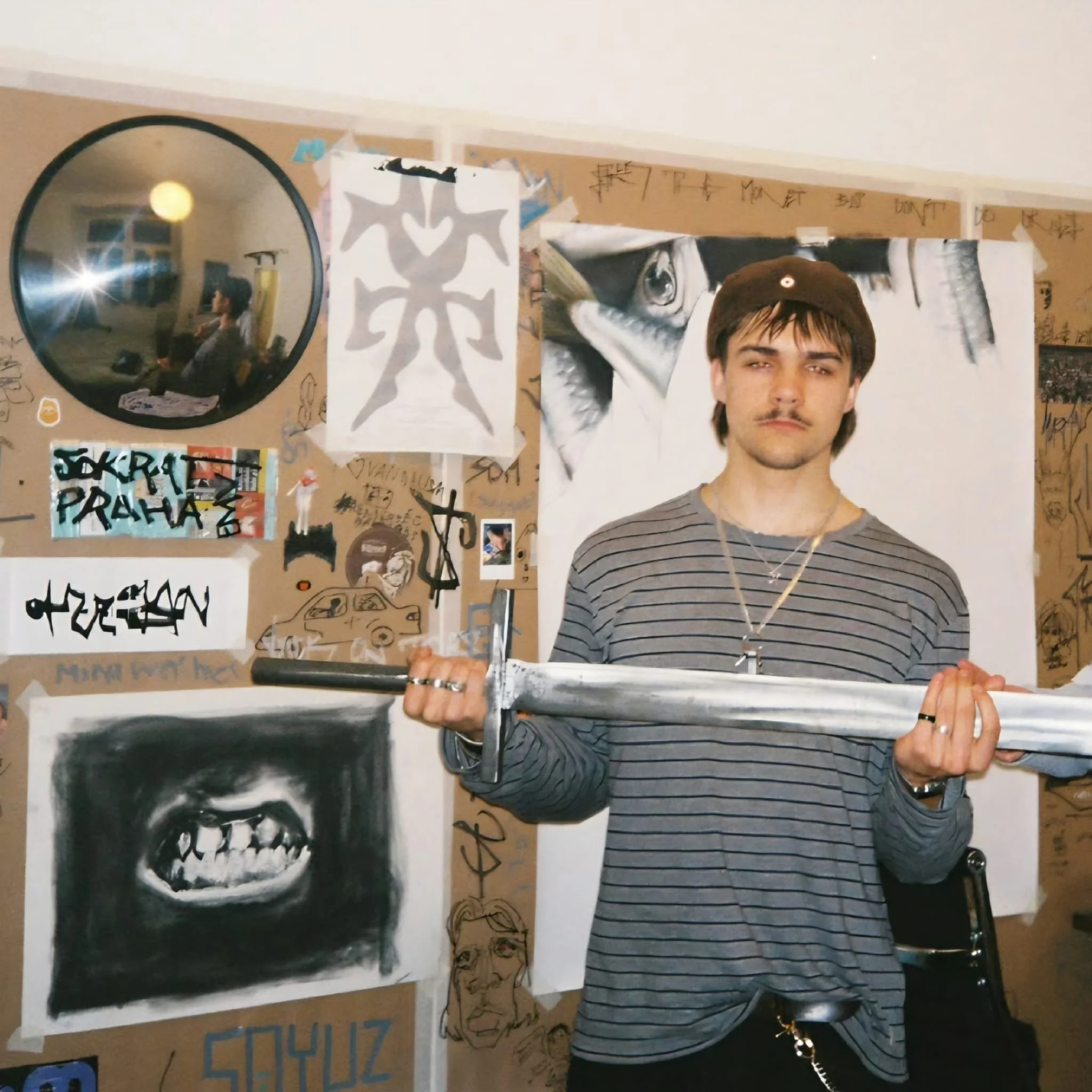
Oskar Fodor
I want to be the kind of person who, in films about the end of the world, simply puts on some music and accepts the end. When buildings begin exploding around them and exaggerated Hollywood-style scenes unfold, they just turn up the radio and let that perfectly calm song keep playing. Or they step out onto the porch and quietly watch the mushroom cloud rise on the horizon.
The kind of person who does not look back at the past, but lives in the present and accepts it for what it is.
Wood, clay, aluminium leaf, acrylic paint.
Bio
Katka Gertli studies at the Faculty of Graphic Arts at the Academy of Fine Arts in Kraków. She primarily works with drawing, animation, and photography, although what she enjoys most in her practice is experimentation and crossing the boundaries between different media. She likes to observe the world around her, and ordinary situations often become her source of inspiration. She analyses and comments on them while attempting to make the invisible visible.
Bio
My name is Oskar, and I create sculptures, drawings, and other forms of visual art. I am inspired primarily by themes that shape the life of an adolescent in contemporary society—in other words, my own life—and by the emotions that these experiences leave behind.
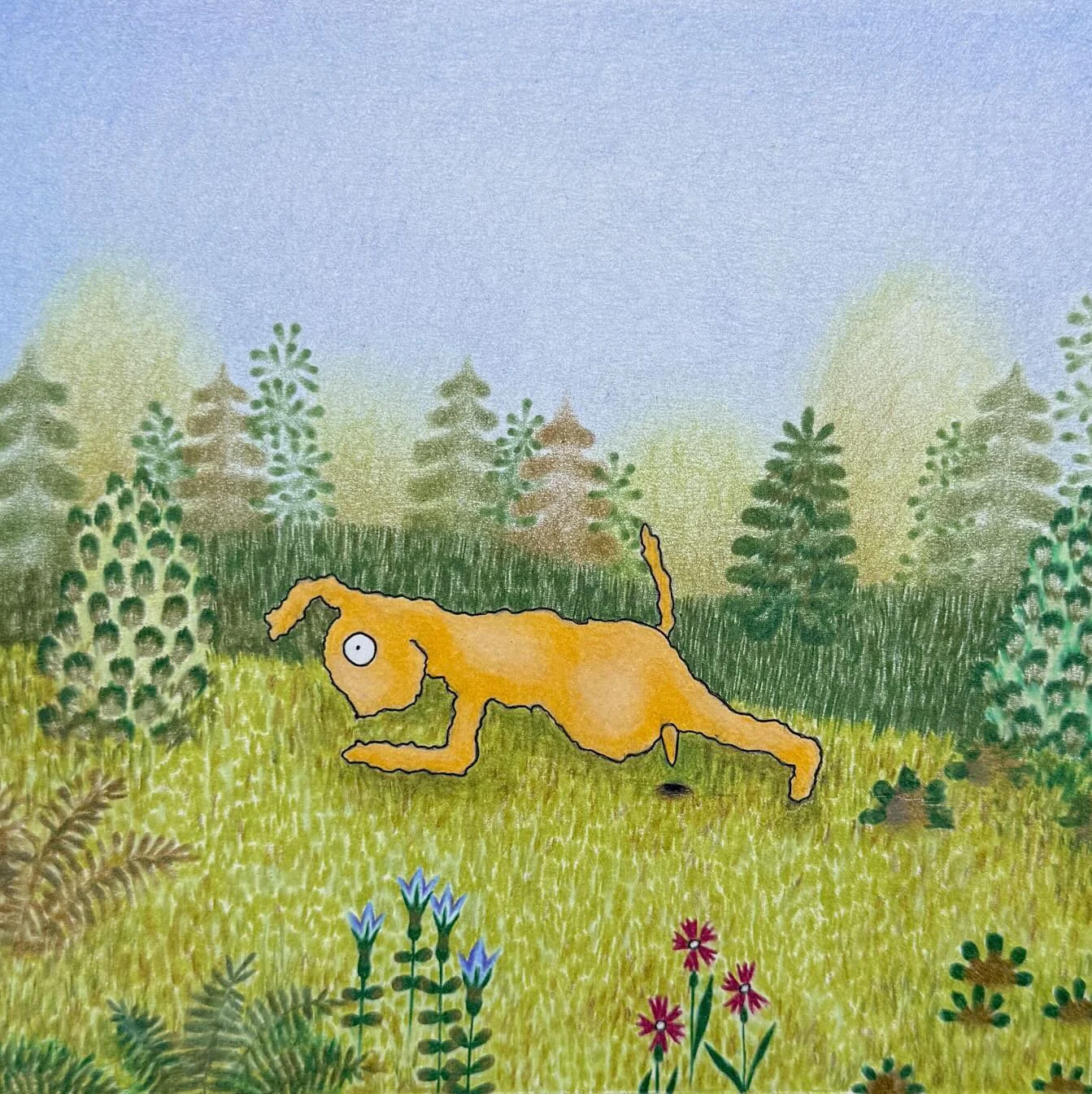
Viktoria Valihora
Ové Pictures